
Can one temple really hold two thousand years of pharaohs? Karnak Temple in Luxor does exactly that: a forest of giant columns, a secret painted corner and a sacred lake where priests purified themselves before dawn.
Why Did Thirty Pharaohs Keep Building on the Same Spot?
Because Karnak was the house of Amun-Ra, the state god of ancient Egypt, and every king who wanted to prove his devotion added something to it. Over roughly 2,000 years, from the Middle Kingdom to the Ptolemies, rulers raised pylons, halls, obelisks and chapels until the complex covered more than 200 acres.
That is why Karnak feels less like one monument and more like a stone archive. Walk from the front gate to the back and you cross centuries of Egyptian history, one pharaoh’s ambition at a time.
Karnak Temple at a Glance: What to Know Before You Go
Here is the planning cheat sheet our guides give every traveler before they pass the first pylon.
| Detail | What to know |
|---|---|
| Location | Luxor’s East Bank, about 3 km north of Luxor Temple |
| Dedicated to | Amun-Ra, with the temples of Mut and Khonsu (the Theban triad) |
| Time to allow | 2 to 3 hours for the highlights, longer if you love detail |
| Best light | Opening time, when the stone glows and the crowds are thin |
| Tickets | Sold per site and revised regularly, so check the current price (see our Luxor ticket prices guide) |
| After dark | A sound and light show runs most evenings; confirm the English schedule |
Ready to see Karnak without the planning? Explore our private Karnak and Luxor Temple tour and let a guide handle the timing.
What Is the Best Route Through Karnak Temple?
Walk it in the order of an ancient procession: from the river gate inward, toward the most sacred room. This route also happens to beat the tour groups.
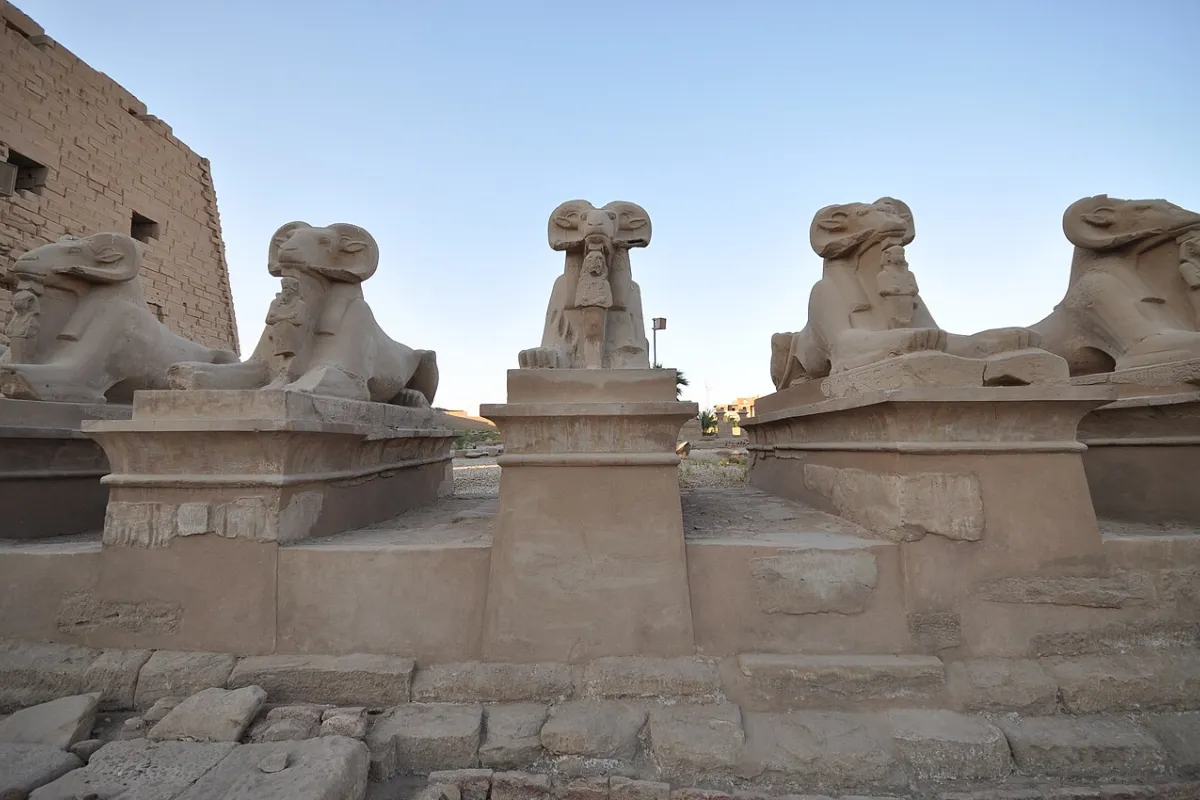
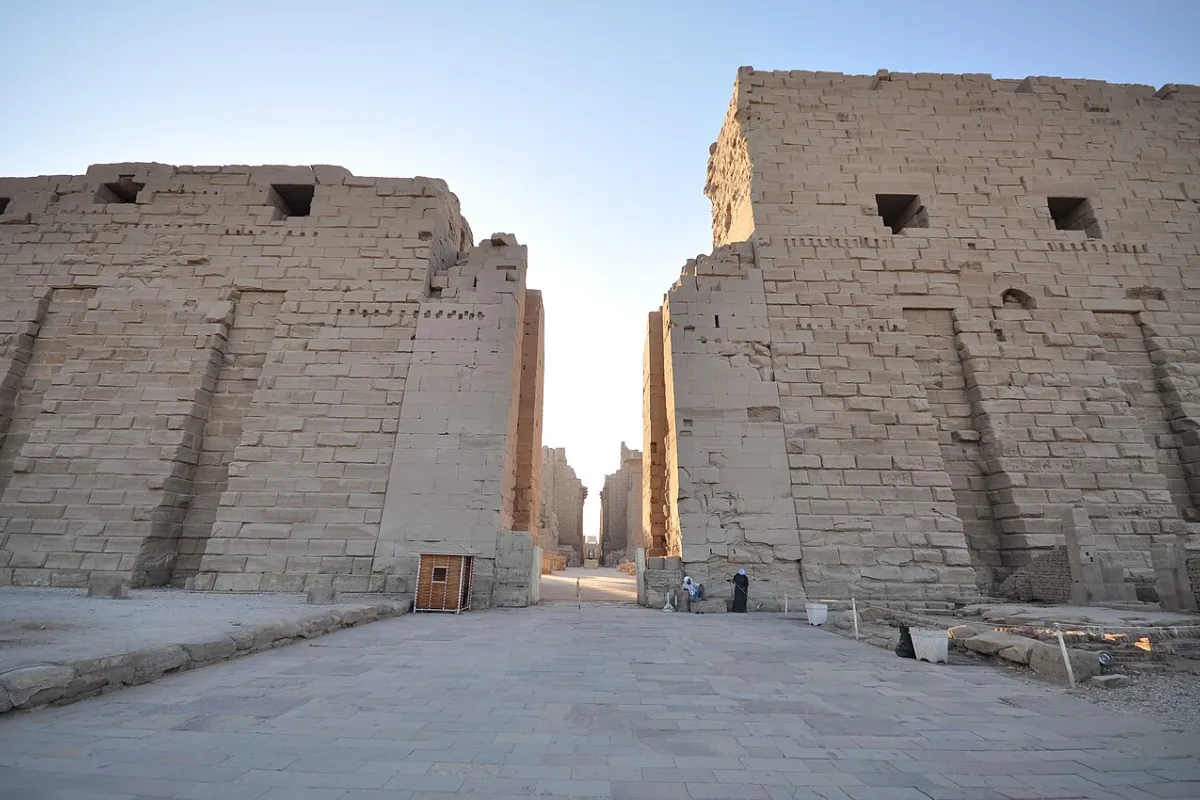
- Avenue of Sphinxes and First Pylon: the monumental entrance, where rams guard the way to the god.
- Great Court: an open courtyard with the lone surviving column of Taharqa’s kiosk.
- Great Hypostyle Hall: the heart of the complex and the moment most visitors remember.
- Hatshepsut’s obelisk: a single shaft of red granite from Aswan.
- Festival Hall of Thutmose III: look up for traces of the original ceiling colour.
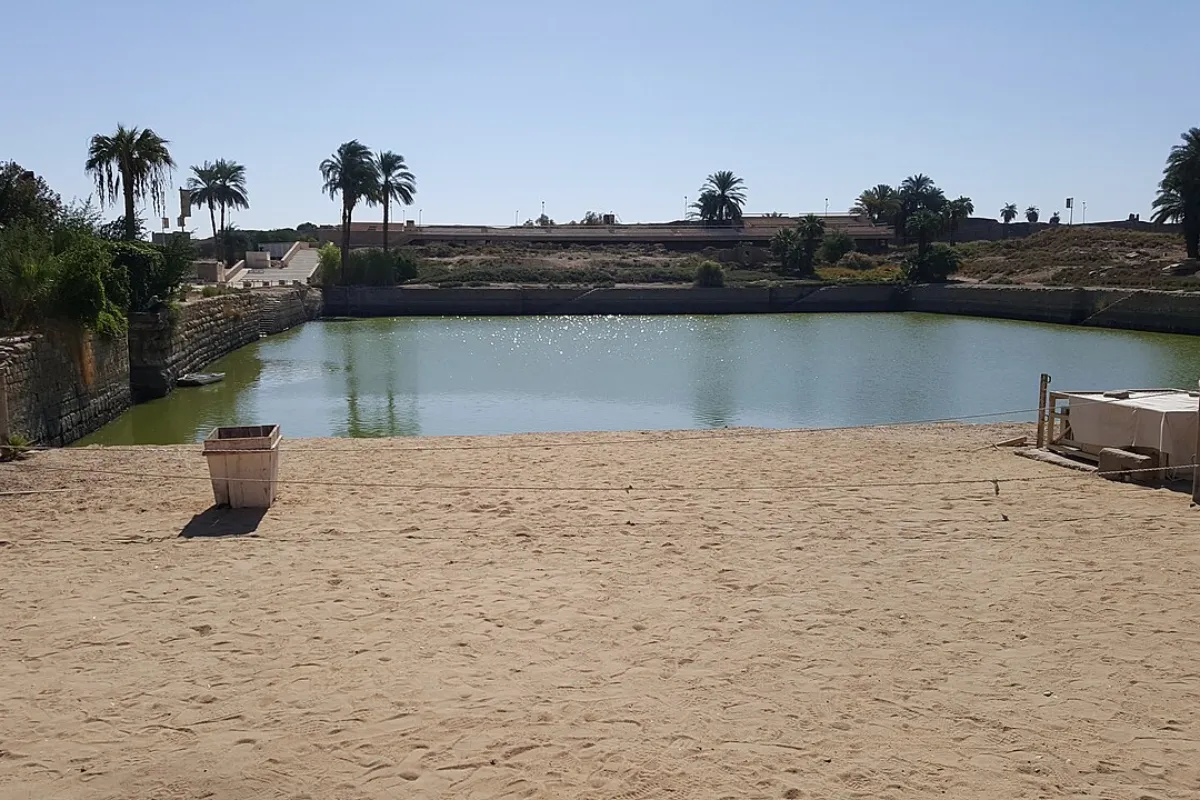
- Sacred Lake: the quiet finish, with the giant scarab at its edge.
What Makes the Great Hypostyle Hall Feel So Impossible?
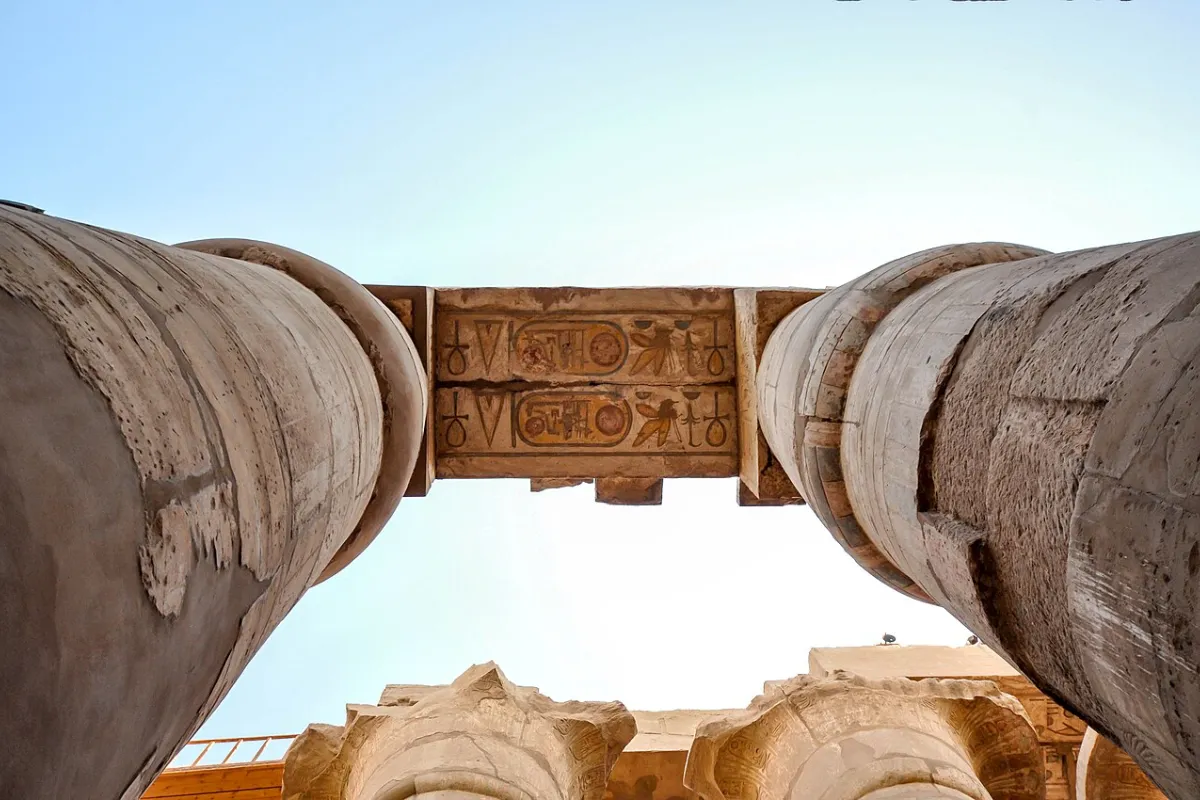
Its scale. The hall holds 134 columns in 16 rows, and the 12 central ones soar to about 21 metres. Stand in the middle and the stone canopy above you seems to swallow the sky.
Builders solved the lighting problem with stone windows set high in the central aisle, so sunlight falls in shafts between the giants. Seti I began the hall and Ramesses II finished it, which is why the carvings change style as you walk.
Field tip: Look up, not just across. Our guides point travelers to the upper lintels and column tops, where flecks of the original red and blue paint still survive. Karnak was never bare sandstone; it was blazing with colour.
Why Did Thutmose III Wall Up Hatshepsut’s Obelisks?
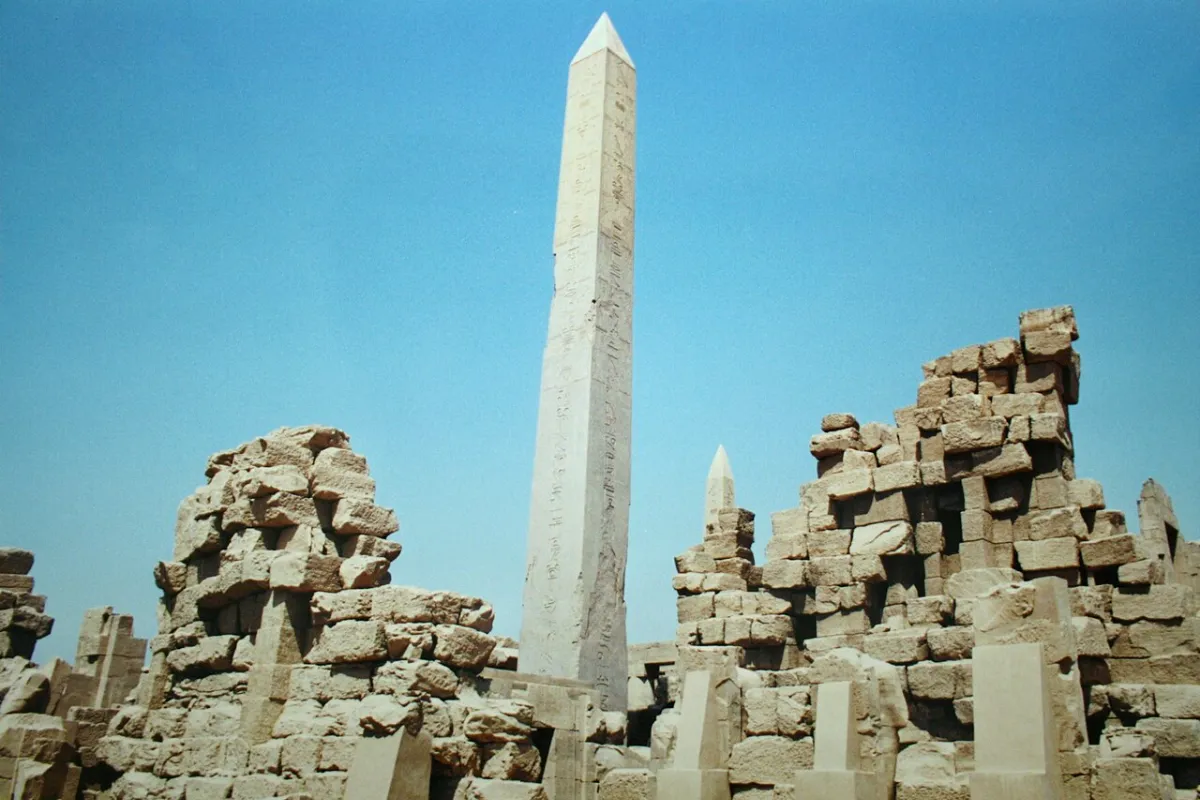
Egyptologists believe he wanted to erase her legacy. After Hatshepsut’s reign, Thutmose III encased her obelisks in a masonry wall rather than topple them, hiding the monuments of the woman who had ruled beside him. One of the pair still stands today, almost 30 metres tall, the tallest ancient obelisk left in Egypt.
The granite came from the quarries of Aswan, floated down the Nile on barges. If that fascinates you, the story continues at the Unfinished Obelisk in Aswan, where a cracked giant still lies in its bed.
What Is the Giant Scarab at the Sacred Lake?
It is a granite scarab beetle, a statue dedicated by Amenhotep III to the sun god in his morning form. Ancient Egyptians saw the scarab as a symbol of rebirth, rolling the sun across the sky like a beetle rolls its dung ball.
Travelers today circle it seven times for luck, a modern tradition our guides always smile at. The lake beside it was where priests bathed and purified themselves before daily rituals, and its calm water makes a welcome pause after the hall.
Ready to step into Egypt’s best-kept secrets? Explore our curated Luxor tours and see Karnak at its quietest.
Is Karnak Better at Sunrise, Midday or After Dark?
Early morning wins for photography and comfort. Light is soft, the stone is cool and the courtyards are almost empty. Midday works only in winter, and the evening sound and light show transforms the same columns into theatre. Plan around the season using our guide to the best time to visit Luxor.
For serious detail work, the Epigraphic Survey of the University of Chicago has recorded temple inscriptions in Luxor since 1924, and its project page shows how scholars read these walls.
How Do You Combine Karnak With the Rest of Luxor?
Pair it with Luxor Temple in the same day: Karnak in the morning, lunch by the Nile, then Luxor Temple as the lights come on. Save the West Bank, with the Valley of the Kings and Hatshepsut’s temple, for another day.
Not sure how to sequence it? Our one day in Luxor plan and the full things to do in Luxor guide show exactly how.
Questions Travelers Ask About Karnak Temple
Which is older, Karnak Temple or Luxor Temple?
Karnak is far older. Its earliest structures date to the Middle Kingdom, while Luxor Temple was built mainly under Amenhotep III and Ramesses II, centuries later.
Can you take photos inside Karnak Temple?
Yes, phone and camera photos are normally fine in the open areas. Tripods and drones need permission, so ask at the gate or check with your guide.
What should I wear to visit Karnak Temple?
Light, breathable clothes, sturdy walking shoes, a hat and sunscreen. There is little shade, so see our what to wear in Egypt guide for details.
Can you see Karnak Temple after dark?
Yes. The evening sound and light show lights the pylons and columns while a narrated walk tells the story of Thebes. Check the current schedule for English performances.
Let Karnak Take Its Time
Karnak rewards travelers who slow down: a processional avenue, a hall of giants and a lake of quiet. Arrive early, look up, and let the stones tell their long story. Ready to walk it with an expert? Book your Karnak and Luxor Temple tour with El Sultan Travel today.